2026-08-31 · John Smith
Moisture and Mold Checks During Valdosta Home Inspections
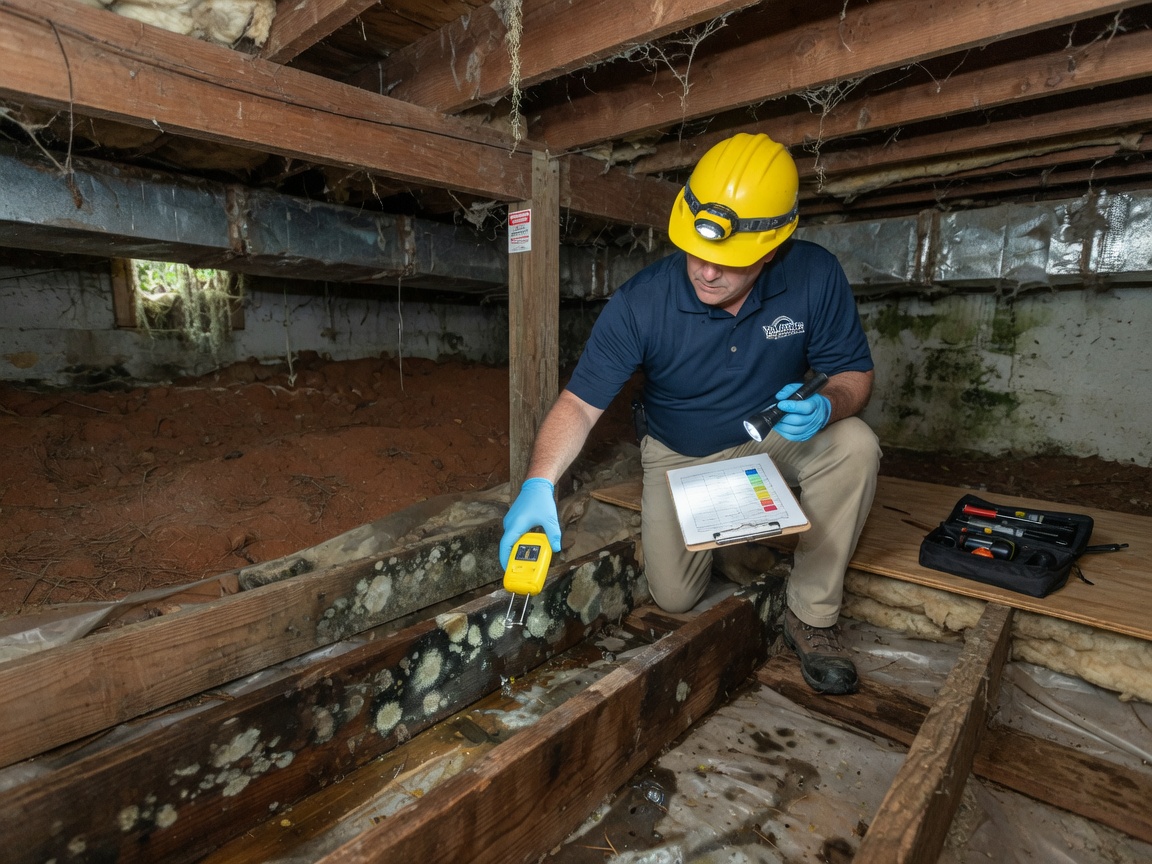
During Valdosta home inspections, moisture and mold checks combine visual scans with moisture meter readings across crawl spaces, attics, and exterior walls, typically lasting 45 to 90 minutes on a standard single-family home.
Impact of Humid Subtropical Climate on Moisture Issues
Valdosta's humid subtropical climate brings hot summers and mild winters that keep relative humidity high for much of the year. This pattern promotes condensation on cooler surfaces inside homes, especially in crawl spaces and attics where ventilation often falls short. Inspectors see elevated readings most often after heavy summer rains when groundwater lingers around foundations in Lowndes County. Homes near Azalea Park and Park Avenue frequently show moisture wicking into sill plates because mature landscaping traps humidity against the structure. Mild winters reduce freeze-thaw cycles but allow persistent dampness that supports mold growth on organic materials. These conditions make routine meter checks essential rather than optional during every inspection.
Common Problem Areas in Local Housing Stock
Valdosta's older homes in Five Points and Downtown Valdosta often feature pier-and-beam foundations with limited airflow, creating pockets where moisture accumulates under bathrooms and kitchens. Newer builds on the Northside and Southside still develop issues around HVAC condensate lines and poorly sealed windows. Inspectors pay special attention to laundry rooms, exterior doors facing prevailing winds, and roof valleys that collect debris. Properties near Valdosta State University and the Lowndes County Historical Society Museum frequently include converted historic structures with original plaster that hides active leaks. Checking these zones with both infrared and pin meters reveals temperature differentials and actual moisture content before buyers commit.
Tools and Sequence Used During Checks
Reliable Home Inspections follows a consistent sequence starting with exterior grading and gutter assessment, then moving inside to test walls adjacent to plumbing. A moisture meter records readings at baseboards, around tubs, and in closets while an infrared camera highlights cooler damp zones invisible to the eye. Attic insulation is lifted in multiple spots to inspect sheathing and rafters, especially after recent storms. When readings exceed 18 percent, inspectors note the location and recommend further evaluation. This process integrates naturally with a full Home Inspection and can lead directly to a dedicated Mold Inspection when discoloration or musty odors appear.
How Findings Connect to Other Local Risks
Moisture problems often overlap with termite activity because damp wood provides ideal conditions for both mold and subterranean termites common across Lowndes County. Inspectors cross-reference moisture maps with termite damage patterns to give buyers a complete picture. Properties in areas like Freedom Park and Barber Park sit on soils that retain water longer, increasing crawl-space humidity that affects both systems. Readers exploring termite concerns can review additional details in the article Termite Risks Inspectors Flag in Valdosta Homes. The same climate factors that drive mold also influence radon entry points, making coordinated testing practical during one visit.
What Homeowners Should Prepare Before the Visit
Owners can improve inspection accuracy by clearing access to crawl spaces and attics at least 24 hours ahead. Removing stored items from closets and under sinks allows meter placement at multiple points without delay. Scheduling the inspection during daylight hours between Mon–Fri 8am–6pm or Sat 9am–2pm lets inspectors use natural light to spot water stains on ceilings and walls. Properties in nearby towns such as Hahira or Lake Park follow the same climate-driven patterns, so the same preparation steps apply. This advance work helps the inspection stay focused on actual conditions rather than access obstacles.