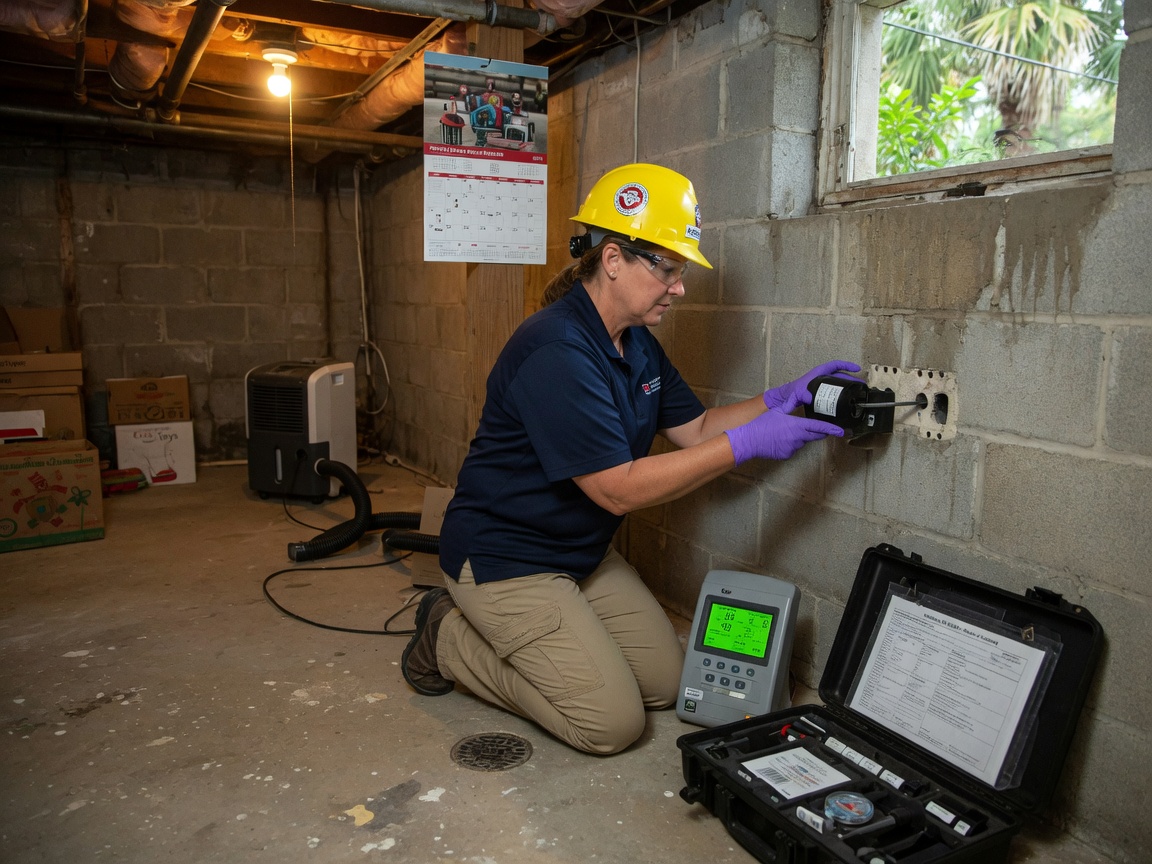
Radon enters homes through cracks in slabs, crawl spaces, and foundation walls common in Southside and Park Avenue properties built before the 1990s. In Lowndes County the humid subtropical climate keeps soil moist most of the year, which can increase gas movement into living spaces during mild winters when windows stay closed. Continuous monitors placed for 48 to 72 hours capture readings that short-term charcoal kits often miss in older Five Points houses with multiple additions.
Testing follows EPA protocols but must adjust for Valdosta’s clay-heavy soils and high water table near Barber Park and Freedom Park. Homes near Valdosta State University frequently show elevated levels because original construction lacked vapor barriers. We document every accessible foundation penetration and note any recent landscaping changes that alter soil drainage around the Crescent or Azalea Park neighborhoods.
Results include mitigation recommendations only when readings exceed 4.0 pCi/L, with emphasis on fan sizing for the typical pier-and-beam setups found throughout Northside. Nearby cities such as Tifton and Moultrie share similar geology, so the same placement rules apply when we test second homes or rental properties for out-of-town owners.
Technician insight
In Valdosta, the thing that catches most people out with Radon Testing is assuming mild winters mean open windows year-round; older crawl spaces in Northside homes built before 1980 trap soil gas once temperatures drop and homeowners close up, producing spikes that summer tests never catch.
Northside Crawl Space Reading
A buyer requested testing on a 1960s home near Valdosta State University before closing. We placed monitors in the living area and crawl space. Readings hit 6.2 pCi/L under the floor but stayed under 2.0 pCi/L upstairs. Sealing the main vents and adding a fan brought levels below 2.0 pCi/L on the retest.
Radon Testing Services We Offer
✓Pre-Purchase Radon Screening
Short-term testing completed before closing on homes in Downtown Valdosta or Park Avenue so buyers know actual levels before finalizing contracts.
✓Crawl Space Radon Assessment
Detailed inspection of pier-and-beam foundations common in Southside and Five Points properties where soil gas collects under living areas.
✓Post-Mitigation Verification
Follow-up testing after system installation to confirm reduced radon levels in Lowndes County homes near Valdosta State University.
✓Rental Property Radon Testing
Screening for landlords managing units around Azalea Park or Northside to meet tenant disclosure expectations in the humid climate.
✓New Construction Radon Check
Baseline testing on recently built homes in the county to verify vapor barrier performance before occupancy.
Radon Testing Cost in Valdosta, GA
| Service | Typical Range | What Affects It |
|---|---|---|
| Standard Single-Family Test | $150–$300 | One or two devices for typical Lowndes County homes under 3,000 sq ft |
| Crawl Space or Multi-Level Test | $250–$400 | Additional devices required for older Five Points or Southside properties |
| Post-Mitigation Retest | $125–$200 | Single device placed after system install |
Ranges are typical for Valdosta, GA and confirmed with an exact written quote before any work starts.
How it works
- 1
Site Walk-Through
We inspect foundation type, crawl space access, and recent grading changes on the specific Valdosta property.
- 2
Device Placement
Monitors are positioned away from drafts and humidity sources according to EPA guidelines for the home’s layout.
- 3
Monitoring Period
Devices remain in place 48–72 hours while the home stays closed to match typical winter conditions.
- 4
Lab Analysis and Report
Readings are reviewed and delivered with location-specific notes on Lowndes County soil and construction factors.
Pricing
Most radon tests in Valdosta fall between $150 and $400 depending on home size and foundation access.